Step-by-Step Guide to Make Award-winning Kkakdugi (Cubed Radish Kimchi)
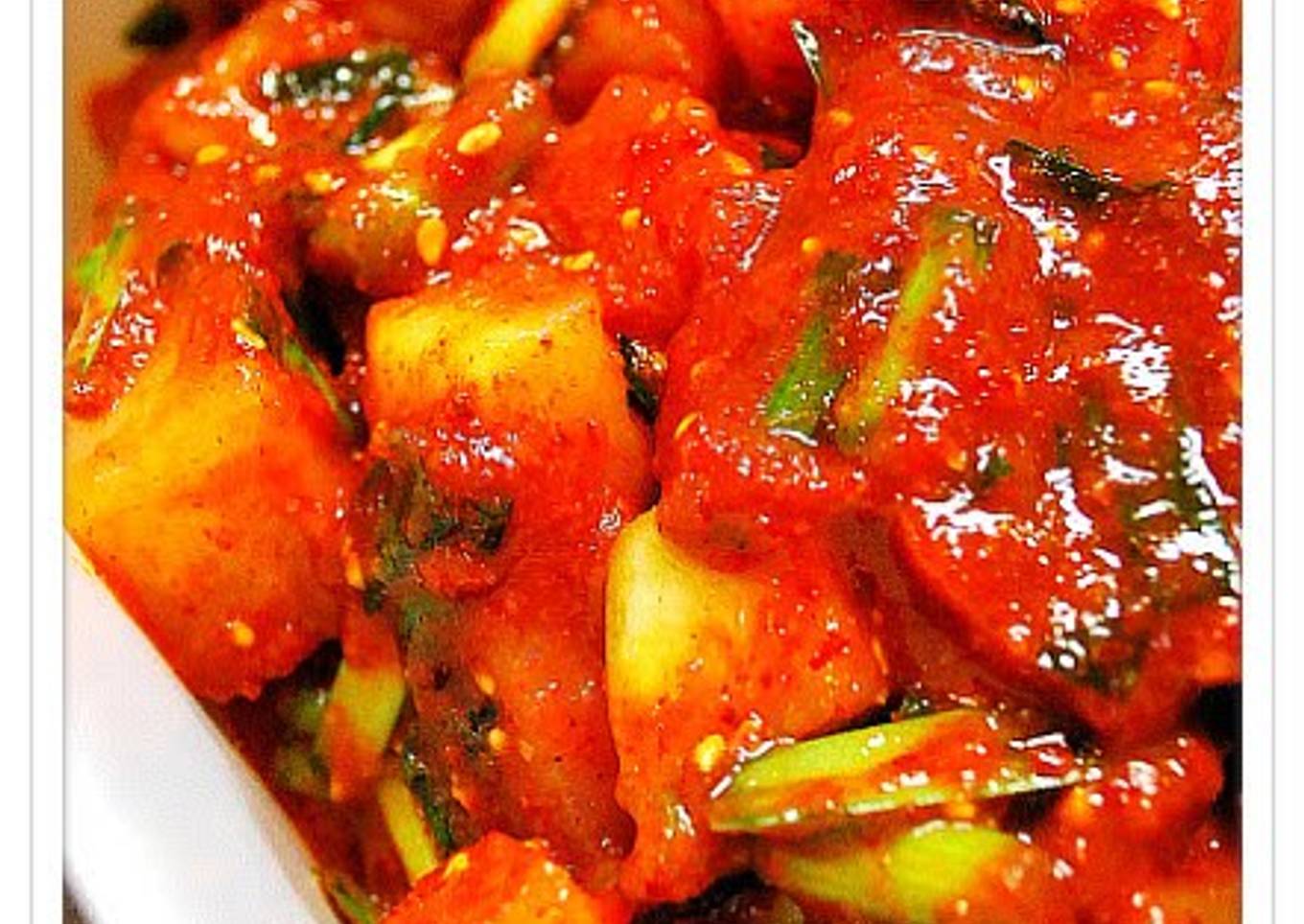
Hello everybody, it is John, welcome to our recipe page. Today, I'm gonna show you how to make a special dish, Recipe of Homemade Kkakdugi (Cubed Radish Kimchi). One of my favorites. This time, I'm gonna make it a little bit unique. This is gonna smell and look delicious.
In regards to cooking, it is crucial to take into account that everybody else started somewhere. I don't know of a single person who came to be with a wooden cooking spoon and all set. There is a whole lot of learning which must be completed in order to develop into prolific cook and there is obviously room for advancement. Not only do you need to begin with the basics in terms of cooking but you nearly need to begin again if understanding how to cook a brand new cuisine such as Chinese, Thai, or Indian food.
Wholesome cooking is often difficult because many people do not need to spend time preparing and planning meals our families will not eat. At the exact same time, we want our families to be healthier so that we are feeling compelled to master improved and new methods of cooking healthy foods to the family to love (and unfortunately in some instances scorn).
There are various books and magazines which can be filled with recipes which encourage healthy cooking and eating customs. In the event that you really love to cookthen there is no lack of recipes which you are able to decide to try along the way. The very good news is that you can incorporate healthy cooking into your cooking routine whether you are cooking for one or a household .
Many things affect the quality of taste from Kkakdugi (Cubed Radish Kimchi), starting from the type of ingredients, then the selection of fresh ingredients, the ability to cut dishes to how to make and serve them. Don't worry if you want to prepare Kkakdugi (Cubed Radish Kimchi) delicious at home, because if you already know the trick then this dish can be used as an extraordinary special treat.
As for the number of servings that can be served to make Kkakdugi (Cubed Radish Kimchi) is 1 serving. So make sure this portion is enough to serve for yourself and your beloved family.
To begin with this particular recipe, we must prepare a few components. You can have Kkakdugi (Cubed Radish Kimchi) using 21 ingredients and 19 steps. Here is how you cook it.
I made this at my daughter's request. Since the spice of red chili powder varies depending on the type, be sure to check the taste while seasoning. The yangnyeom from Step 14 is enough for 3-4 daikon radishes worth of kkakdugi. Store the leftover yangnyeom in the freezer, then the next time you make kkakdugi, all you have to do is pickle the daikon. Recipe by kanako8224
Ingredients and spices that need to be Get to make Kkakdugi (Cubed Radish Kimchi):
- 1 Daikon radish
- 16 grams Salt
- 15 ★ Small dried sardines (niboshi)
- 2 pieces ★ Kombu
- 1000 ml ★ Water
- 160 grams ▼ Rice
- 23 grams ▼ Dashi soup stock
- 100 grams ◆ Onions
- 53 grams ◆ Garlic
- 30 grams ◆ Ginger
- 5 ◆ Korean red chili peppers (red)
- 90 grams ◆ Japanese plum extract
- 60 grams ◆ Sardine extract
- 30 grams ◆ Fermented krill
- 50 grams ◎ Korean red chili powder (for kimchi)
- 50 grams ◎ Red chili powder (seasoning)
- 1/2 bunch ☆ Green onions
- 1/2 bunch ☆ Chinese chives
- 30 grams Sugar
- 12 grams Salt
- 30 grams Toasted sesame seeds
Steps to make to make Kkakdugi (Cubed Radish Kimchi)
- Thoroughly rinse the daikon radish, and peel the skin with a peeler. Set aside the stalk end and root end. Do not discard.

- Chop the daikon radish into 2 cm rounds, dice them into 2 cm square cubes, then place them in a large bowl. Set aside the triangular shaped pieces.

- While chopping the daikon into cubes, place the ★ ingredients, the triangular shaped daikon pieces and the root end into a large pot with water to prepare the broth.

- Thoroughly rinse the stalk end, and cut the undamaged leaves into 2 cm lengths.

- Combine the cubed daikon and the leaves, add salt, lightly toss, and let sit for 1 hour. Do not rub the salt in.

- After 30 minutes, gently toss to evenly distribute the salt. Do not rub the salt in.

- Turn on the heat under the pot from Step 3, reduce it to medium-low heat after bringing it to a boil, then simmer for 30 minutes to make the broth. Do not let it boil.

- After about 1 hour, thoroughly drain the daikon and leaves from Step 6.

- After the broth is finished, prepare the yangnyeom. Put the rice in a bowl, pour in the hot broth, then process with a hand mixer.

- Process the rice and broth from Step 9 into a thick paste-like porridge, and transfer it to a large bowl.

- Prepare the ◆ ingredients to add to the porridge from Step 10. Remove the seeds from the red chili peppers, then roughly chop them with the onion, garlic, and ginger to make them easy to process, then add them to the porridge.

- Pulse the porridge with the added ingredients, check to make sure that the red chili peppers are finely processed, then turn off the mixer.

- You should be able to buy the Japanese plum extract at a Korean specialty shop. You could also substitute it with sweet syrup or a mild honey, but you will need to adjust the amount of sugar that you add.

- Add the plum extract to the porridge from Step 12, mix well, let it sit for 10 minutes, then stir again. Then the yangnyeom is ready.

- Place the daikon and leaves from Step 8 into a bowl, chop the ☆ ingredients into 2 cm lengths, add them with 250 g of the yangnyeom from Step 14, and evenly combine.

- Gradually mix in the sugar and the salt, and season to taste.

- Add the toasted sesame seeds and mix.

- It's done! Enjoy the three distinct flavors of freshly pickled kkakdugi, marinated kkakdugi, and sweetly acidic kkakdugi

- Store it in a Tupperware container with a lid, let it sit for a day at room temperature, then store it in the refrigerator from the next day onwards.

While that is in no way the end all be guide to cooking fast and simple lunches it's excellent food for thought. The hope is that this will get your creative juices flowing so that you can prepare wonderful lunches for the own family without needing to perform too terribly much heavy cooking from the process.
So that's going to wrap this up for this special food Recipe of Super Quick Homemade Kkakdugi (Cubed Radish Kimchi). Thank you very much for reading. I'm sure you can make this at home. There's gonna be interesting food in home recipes coming up. Don't forget to bookmark this page in your browser, and share it to your loved ones, friends and colleague. Thank you for reading. Go on get cooking!
)
Post a Comment for "Step-by-Step Guide to Make Award-winning Kkakdugi (Cubed Radish Kimchi)"